
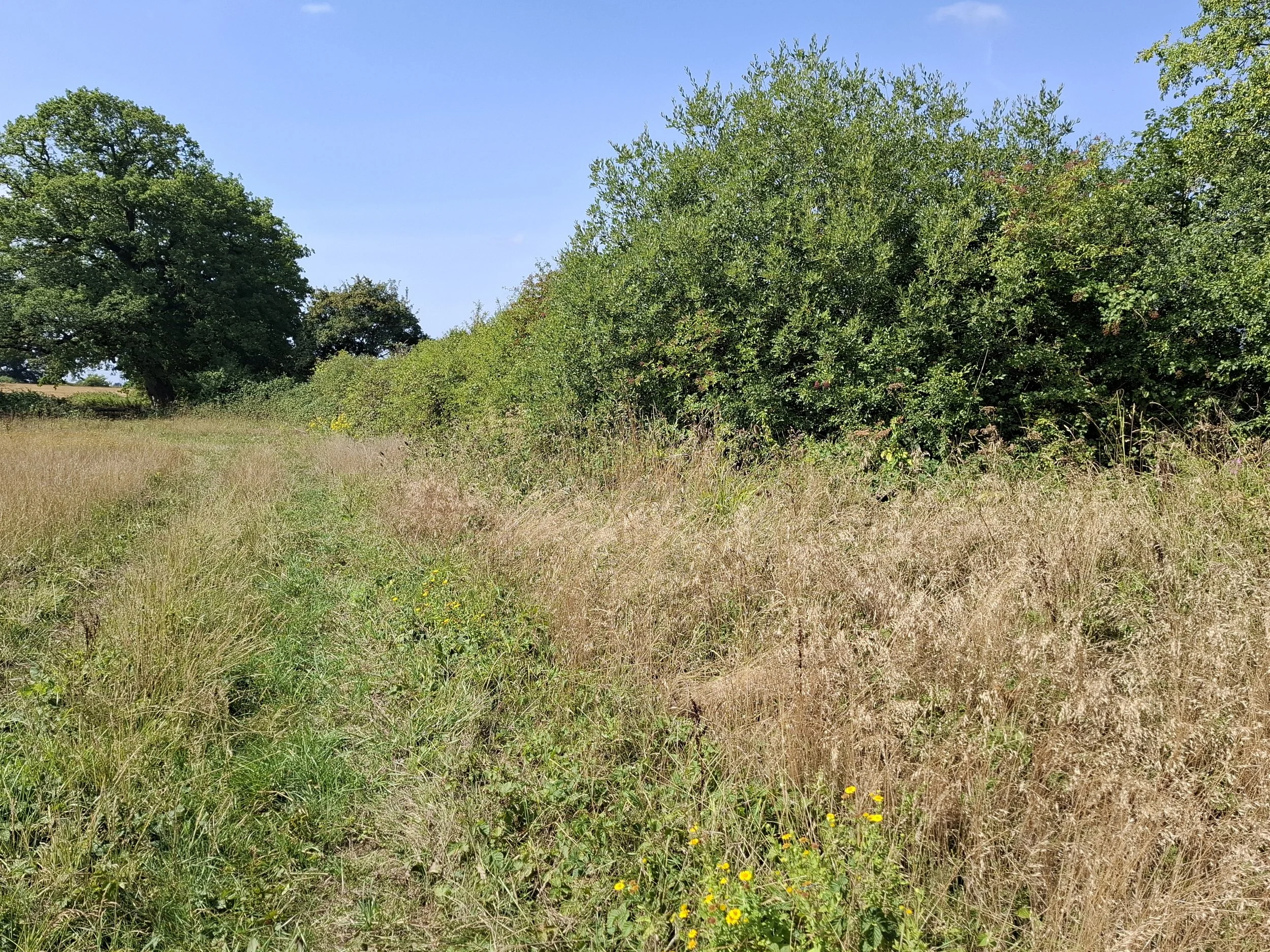
Managing habitats on your farm for bats and invertebrates
This event, hosted by Berkeley Heath Farm in the Severn Vale, brought farmers together to explore how working with nature can deliver practical, on-farm benefits. Sarah Wells, Senior Adviser at FWAG SouthWest, shared insights through her role facilitating the Severn Vale Guardians Farmer Group, highlighting how soil health, grazing management and livestock systems underpin resilient farming.
Jane Davies, Agriculture Officer at the Bat Conservation Trust, gave a presentation on how bats rely on grasslands managed to support active dung beetle populations, abundant insects, and connected habitats across the farm. A single dung pat can support around 1,000 insects, forming an important food source for bats; while dung beetles deliver wider benefits through faster dung breakdown, improved soil structure, and reduced fly and parasite pressure. It was great to hear all the questions and discussion that the presentation generated; including what can we do about lighting of buildings, creating artificial and natural roosting sites, and how to sensitively manage woodland and trees.
A tractor tour around Berkeley Heath Farm provided an opportunity to look at existing features that already support bats and to discuss practical options for enhancing habitats further, drawing on shared farmer experience and local knowledge.
Useful links from the presentation:
Woodland Wildlife Toolkit - Bats and woodland - Bat Conservation Trust Advice and guidance on managing woodlands for wildlife, in particular rare and declining species that are dependent on woodland habitats
Buildings, planning and development - Our Work - Bat Conservation Trust Buildings, planning and development
https://www.scops.org.uk/internal-parasites/worms/using-worm-egg-counts/ Sustainable control of parasites and using worm egg counts
https://www.cattleparasites.org.uk/ Sustainable control of worms
https://www.dungbeetletrust.co.uk/ More info on dung beetles! Did you know curlews also rely on dung beetles for food? Also see Dung Beetles for Farmers
Key take-home points:
Bats provide ecosystem services and are great indicators of habitat quality and invertebrate abundance. The value of bats to the dairy industry has been estimated as £35million due to their feeding on pests.
Wetlands, unimproved grassland, hedgerows, dung, flower rich margins and woodlands are all important habitats for bats and supporting invertebrates that bats feed on. It differs between bats species as to the habitats they are most reliant on. For example; horseshoe bats rely heavily on dung beetles while Daubenton’s Bats specialise on feeding over watercourses and ponds.
Maintain and enhance hedgerows to improve habitat connectivity across the farm. Hedgerows that are cut on a rotation to allow flowering and berry production, act as key commuting and foraging corridors for bats, helping them move safely between roosts and feeding areas and supporting stronger insect populations along field margins. Tall, wide and uncut hedges provide three times as many invertebrates.
Grasslands that are unimproved or lightly improved (i.e. contains species diversity) with mixed sward heights and grazing animals are most important for bats.
Manage woodlands to retain and protect existing roosts, minimise disturbance and connect with foraging sites. Typically woodlands of 1-2km in size are needed for roosting. Keep large trees and avoid managing potential roost trees in summer and winter.
Manage buildings to protect existing roosts/access points, minimise disturbance and connect up to foraging areas. Keep lighting to a minimum where possible. Boxes for day roosts should be on the outside of buildings, closest to foraging habitat. Maternity roosts are inside buildings for warmth. Hibernation roosts require cool, consistent temperatures with no air disturbance.
Minimalised and targeted anthelmintic application should form the main part of parasite control. Adopt a sustainable worming protocol that includes monitoring faecal egg counts (FEC) to reduce the use of flukicides/wormers. This helps cut unnecessary treatments, lowers costs and reduces the risk of resistance.
Correct storage, accurate calibration of dosing equipment, and effective administration techniques are essential for effective targeted treatment. This limits overuse of endectocides and reduces the risk of anthelmintic resistance.
Avoiding the use of clear wormers (macrocyclic lactones including avermectins) can significantly reduce harm to dung insects. Where alternatives exist, consider using currently available options with lower impacts on non-target species.
Residues decline over time at varying rates, but dung toxicity is highest in the days/weeks after treatment. Housed treatment or the use of a sacrifice field (away from watercourses) for up to four weeks post-treatment can reduce impacts on invertebrates across the wider farm.
Dung beetles are especially important to Serotine Bats in August and September. Try to minimise use of high-impact products during spring/summer when dung fauna activity is highest.
Implement natural control measures through rotational grazing with mixed livestock to reduce pasture load. Alternating cattle, sheep and horses can help dilute parasite levels and disrupt parasite life cycles. Retain naturally diverse pastures and incorporate herbal leys on grazed land. These types of grassland contain plants with anthelmintic properties which help disrupt parasite cycles within the pasture. Swards containing bioactive species (particularly condensed tannins) can support livestock growth and reduce reliance on chemical treatments.
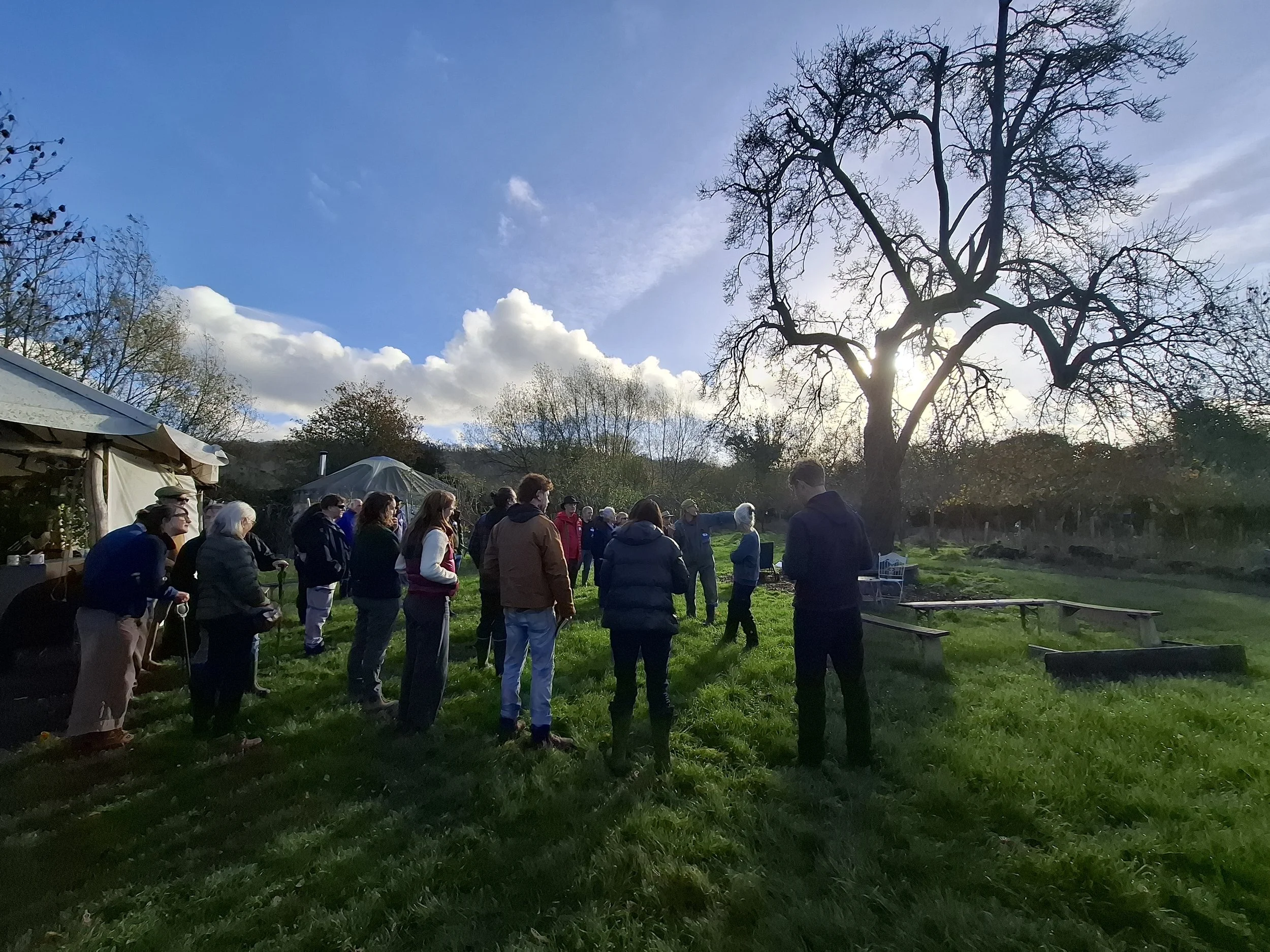
Managing traditional orchards for produce and wildlife
During what was a miserable November, we managed to find the most beautiful day for our event on managing traditional orchards. Hosted at Day’s Cottage, a local cider makers near Gloucester, we were fortunate enough to have the guidance, experience and expertise of the owners Helen and Dave as well as FWAG South West’s Trees Outside of Woodlands Specialist, Simeon Day to lead the day.
The focus of the day was on how to assess, restore and look after traditional orchards, their importance for wildlife, the benefits to the farm and wider environment and how to get the produce to market.
The day began with a tour around the orchards at Day’s Cottage. These contain a vast range of apple and pear varieties many of which are old, unusual and local Gloucestershire varieties. As these orchards have been planted and restocked over many years, (the first being planted in 1912) we had the chance to look at trees in all sorts of life stages, from the very oldest to the very young.
This allowed us to discuss the importance of assessing your trees (and the orchard as a whole) before deciding what works need to be carried out. The aim of an initial assessment is to understand the condition of each tree and determine the best ways to keep it healthy and thriving into the future. Simeon, Helen and Dave pointed out various features such as broken limbs, rotting trunks and leaning trees and talked through how these are currently managed as well as providing tips on how these types of trees and other features should be managed going forward.
We also discussed the importance of considering wildlife within your orchard management. While the primary function of a traditional orchard may be for the produce, the trees, grassland and the surrounding hedgerows provide homes, food and shelter for all sorts of plants and animals which in turn can provide benefits back to the farm and wider environment. Insects for pollination and pest predation are just two major benefits you can get from looking after your orchards.
The second half of the morning involved visiting the nearby farm where production of all the juices, perries and ciders takes place. Helen and Dave took us through each step in the process from washing, crushing and juicing through to bottling and taking to market. We were event able to try a number of juice and cider samples, all delicious and all very different due to the fruit variety or combination of varieties used.
The day wrapped up back in the yurt where we looked at the tools required for pruning and harvesting and discussed funding options currently or soon to be available to support orchard management and creation.
All in all, we learnt a huge amount and what with such beautiful weather in the middle of a miserable week we certainly had a fantastic day all round!
For more information on Day’s Cottage and their courses visit www.dayscottage.co.uk.
This event was made possible by the Western Forest, England’s new national Forest an initiative funded by Defra and also by Defra as part of the Facilitation Fund Scheme.

Hedgerow and tree health
It was a foggy day in the vale, when around fifteen members of the Severn Vale Guardians, as well as local ecologists, gathered under the lofty ceiling of Standish’s beautiful 700-year-old village hall. We warmed ourselves with coffees and plate sized pastries, discussing the upcoming festive season, and the successes, and challenges we all faced over the course of the farming year. After some good catching up, we sat down to listen to Simeon Day, FWAG SW’s regional Hedgerow and agroforestry expert, who talked through a lot of the theory we would be covering throughout the day. Simeons fantastic presentation covered everything from the hedgerow life cycle, to how we can begin to spot signs of ill health in our veteran trees. Particularly useful to farmers was Simeons discussion on the “Adams scale” a brilliant way of categorising hedgerows into different structures, which can offer clues as to how they should then be managed. These range from new planted hedges to “Over-trimmed hedges”, and others which are “Dense and well managed”. This was then tied into SFI, and how to carry out the action CHRW1: Assess and record hedgerow condition, which offers funding for farmers who walk their hedgerows and really take a look at how they can be better managed for wildlife. In addition, ash die back was a topic of great interest to our farmers, and Simeon also covered the legal obligations for farmers who have dead or dying trees on their land, including those that are adjacent to footpaths or other areas of high foot traffic. For those seeking to explore this further, information is available on the Linking Environment And Farming (LEAF) website and series of informative YouTube videos.
After some theory, we were ready to get our wellies on and pile in our pickups to John and Jenny Percival, who farm just down the road at Horsemarling Farm. John and Jenny are council tenants, and their unique business structure, providing direct sales to local people through a milk “vending machine” sets them apart. However, more relevant to the day, Horsemarling is home to some truly venerable old trees, both standing sentinel in the pasture, amongst the herd of dairy shorthorns, as well as within the line of the hedgerows that criss-cross the land. This offered Simeon the chance to point out various habitat features on the old trees, such as nest holes for birds, as well as knots and broken limbs, favoured by bats as daytime roosts. The presence of ivy on trees also sparked some interesting conversation, as despite the “strangling” look of the plants, Ivy is almost completely neutral to the tree’s health, and in fact it can significantly enhance the value for wildlife, offering late season pollinators their blossom and providing species like thrushes and blackcaps with nutritious berries.
Part of our practical approach to these events led us to carry out our own hedgerow assessments, where we decided which category a hedgerow might fit into, and the management that would likely be appropriate. The group correctly noticed the overgrown and straggly nature of one hedge and decided that this would be best to coppice or lay, thus restarting the hedgerow cycle.
However, it is important to have a mosaic of hedges on the farm, and straggly hedges deliver different benefits to ones that have more recently been “rejuvenated”. One of the main takeaways from our discussion was the idea of “incremental cutting” whereby the hedge is in effect only tickled and cut off shorter than it was the previous year. By not cutting back to the same point each year, we can ensure there is plenty of the second-year growth needed to produce blossom and therefore berries. This also prevents the formation of scar tissue that can split and allow infection to get into the plants, eventually causing stems to die.
Next, accompanied by one of Horsemarling’s very inquisitive young cows, we all gathered round a particularly old willow, which is a common sight in the wet Severn Vale, and pollarding of these trees is a winter job many farmers still undertake.
Undergoing this process can be difficult with very old trees, and this gave us a fantastic opportunity to go over some of the complicated policy to do with protected species, and the need to properly assess the trees before work is undertaken. Conducting roost surveys with a local ecologist is essential when pollarding ancient willows, as bats often nest in rot holes or under bark. Simeon also covered funding streams for this work, which offered some of our farmers the chance to raise their concerns on the financial burden they can be left with after carrying out conservation work.
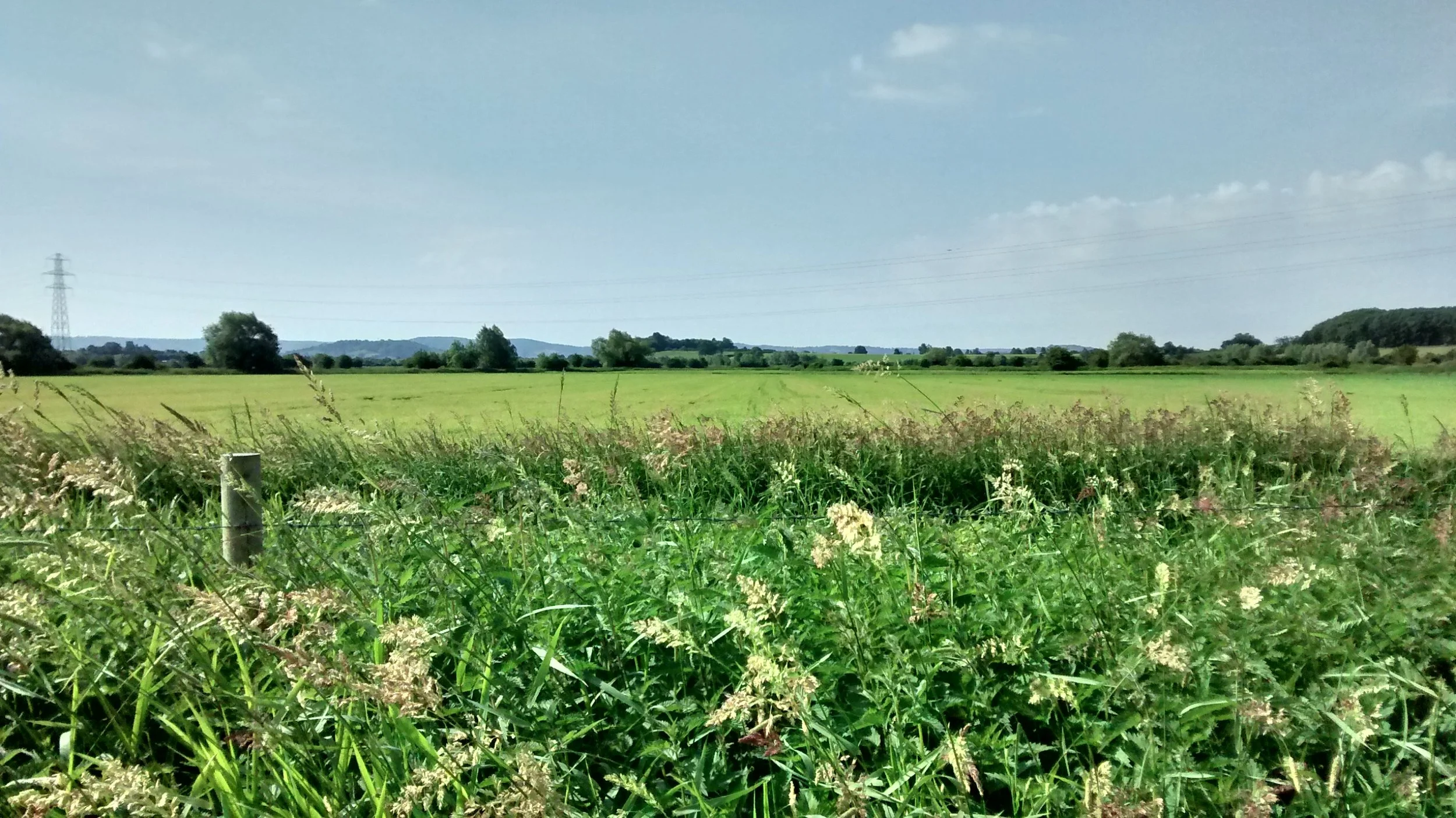
Flooding: resilience and recovery
After a particularly hard, and consistently wet winter, many of our farmers found themselves with fields that had been under water since October 2023, and many others that had been waterlogged intermittently. This prolonged inundation can have big impacts on the ground, and so we felt there was a need to hold an event where we could take stock and discuss steps farmers can take to help their land recover. As these kinds of conditions are only going to become more regular with climate change, the low-lying Severn Vale is going to be one of the first places to feel the effects.
This event was hosted at Maismore Village Hall, where we spent the morning talking about the extent of flooding we had seen this year, and how we can start “futureproofing” ourselves. We touched a little on policy, and how farmers can feed up what they have been to relevant bodies, to help inform decision making in the area. The damage that this weather has had on breeding bird numbers, and other species that call the vale home, was also discussed. It was especially useful to have Mike Smart of Curlew action present, who talked about how Curlews have begun changing their nesting habits in response to this change in habitat, caused by flooding. Some have even begin nesting in arable fields, due to grasslands near the rivers being inundated.
After this, we watched a video provided by FWAG SW advisor Rachel Leonard, based in Somerset, about her work on “moor associations” and collaborative work agreements, and how these can help influence bodies in the local area, such as the Environment Agency. We also heard a video from Devon farmer James Leigh, and how he manages flooding on his farm, starting with his soils and getting them tested to inform changing management practices.
After some pasties from Over farm shop, we all piled into our cars and headed across the road to Persh Farm, owned by SVG member, Greg Chamberlayne. We were shown round by his very Knowledgeable farm manager, Richard Griffiths. Richard showed us some of the fields adjacent to the river that had been reverted from arable to grassland, and how they had been manging this to help improve resilience. With shovels out, we had a look at the soil for any signs of compaction and talked about ways to remediate this to improve drainage.
There was also some discussion on grass species, and how some are better adapted to flooding and waterlogged conditions, and can bounce back quicker after the water has drained away. One of our members, Colin Evers, very kindly provided a list of grass species found in the meadows of Walmore common (click here to view), where the fields are regularly inundated, with little permanent damage done to the grassland after it emerges from under the water. Even during summer flooding, and the resultant rotting biomass created seems to not have much of a long-term effect on the species rich community found there.
Thank you to all for attending, and for providing numerous points for the group to discuss.

Traditional orchard management
Whilst a wet day in the Severn vale to be sure, it was still a successful event, with discussion and practical demonstration taking place throughout. Hosted very kindly by Jeremy Phelps at his dairy farm, the topic was presented by the FWAG SW Orchard specialist, Simeon Day.
With teas and coffee in hand, and gathered round in the barn, Simeon started the day leading us through the history and biology of apple trees, including rootstocks and orchard design. I was particularly interested in the idea of chill units, where apples require a certain number of days a year between 0-7C degrees in order to produce fruit, and climate change is changing what varieties of apple we are growing due to this.
This bought us all up to speed, and we then moved on to types of pruning, and the theory behind this management strategy. We were told about restorative pruning in depth, and how we can help revive fruit trees that have fallen into a state of neglect. This all helps maintain a healthy orchard, free of disease, and resilient to our fickle weather and fierce storms.
Next Simeon put some of this theory into a practical context, talking about funding, and how the Countryside stewardship scheme can pay farmers to manage, and restore traditional orchards.
After some pasties, provided by over farm shop, we braved the elements and all made our way to Jeremy's orchard. Here we look at trees at different stages of their lifecycle, and what was good about them, and were there any where restoration was a possibility. Seeing the breadth of ages really gave a full view of orchard management, and the solutions we can use. The field itself also has underlying ‘ridge and furrow’, which offers its unique challenges, and this helped facilitate a discussion on farming with archaeology.
I would like to thank all for attending, as well as to Jeremy and Simeon for being splendid hosts and presenters, respectively. Thank you also to FWAG SW staff for helping to set up.

Farmland Bird Identification Event at Frampton Court Estate
Our farmland bird identification event in mid February started in the Wool Barn by kind permission of Frampton Court Estate, where the knowledgeable speakers including Gordon Kirk, regional representative from the British Trust for Ornithology (BTO) and Richard Hollis FWAGSW’s trainee Farm Environment Advisor in Cornwall gave presentations. This day is one of a calendar of events for the Severn Vale Guardians farmer group, a Defra funded Facilitation Fund group.
The discussions offered guidance on distinguishing common farmland birds through visual observations and contrasting calls. Following this, attendees learned about the procedures for conducting surveys on their own land as part of the Big Farmland Bird Count (BFBC), an annual event organised by the Game and Wildlife Conservation Trust that encourages farmers and land managers to record the bird species on their farm; and aims to raise awareness of the important role that farmers play in the conservation of farmland birds.
Gordon Kirk also explained the role of the BTO, urging farmers to get involved with surveys when approached by the organisation. He emphasised the opportunity to link up with knowledgeable local bird watchers ensure accurate information on bird population trends.
The presentations were followed by a tour of the farm discussing measures to support farmland bird populations through the actions in Countryside Stewardship and the Sustainable Farm Incentive.
Along the boundary of the first field we visited, a group of overwintering Redwings and Fieldfares were using some of the trees in the hedge, feeding on the remaining berries as well as looking for worms and other insects on the ground. The sun was shining, and the good weather encouraged plenty of Skylarks to give their characteristic display flight, with their incredible song being the backdrop for much of the farm visit. The fields themselves were supporting a large group of Linnets, feeding on the ground and flitting up to rest in the hedgerow before moving on to the next area of field to forage in. This mobility allowed us to see their bouncy flight pattern and diagnostic brown and silver wing pattern which lets you identify them even in flight.
Along a farm track, Peter Clifford, the farm manager, had been providing supplementary seeds which were being enjoyed by a flock of Chaffinches and even a Reed Bunting that had joined them for safety over winter. The last area of the farm we visited had a mixed group of Pied Wagtails and Meadow Pipits looking for insects around standing water and we even managed to find some fresh Barn Owl pellets in one of the farm buildings along the way!
To finish the day, participants enjoyed locally prepared pastries sourced from Eastington farm shop, whilst they discussed what was seen and future arrangements to carry out surveys. It was a fun and informative day for everyone involved!
Mute Swan – 2
Tufted Duck – 24
Pheasant – 5
Woodpigeon – 4
Moorhen – 3
Coot – 16
Great Crested Grebe – 1
Cormorant – 2
Buzzard – 2
Kestrel - 1
Magpie – 3
Jackdaw – 130
Rook – 6
Carrion Crow – 3
Great Tit – 1
Skylark – 9
Long Tailed Tit – 2
Starling – 52
Redwing – 9
Blackbird – 2
Fieldfare – 4
Robin – 2
House Sparrow – 1
Dunnock – 1
Pied Wagtail – 16
Meadow Pipit – 9
Chaffinch – 11
Greenfinch – 1
Linnet – 80
Goldfinch – 5
Reed Bunting - 1